Google’s updated AI content guidelines have major implications for SEO, affiliate marketing, and AI-generated content strategy. The guidance explicitly requires fact-checking of all AI-generated content before publication, including metadata and structured data. For affiliate sites and publishers relying on AI assistance, this creates both challenges and opportunities.
What Google’s AI content rules actually say
Google’s developer documentation clarifies that generative AI models predict plausible language based on training patterns—they do not reliably retrieve and verify facts. AI models frequently hallucinate: invent details, cite non-existent sources, misstate conditions, or present outdated information as current.
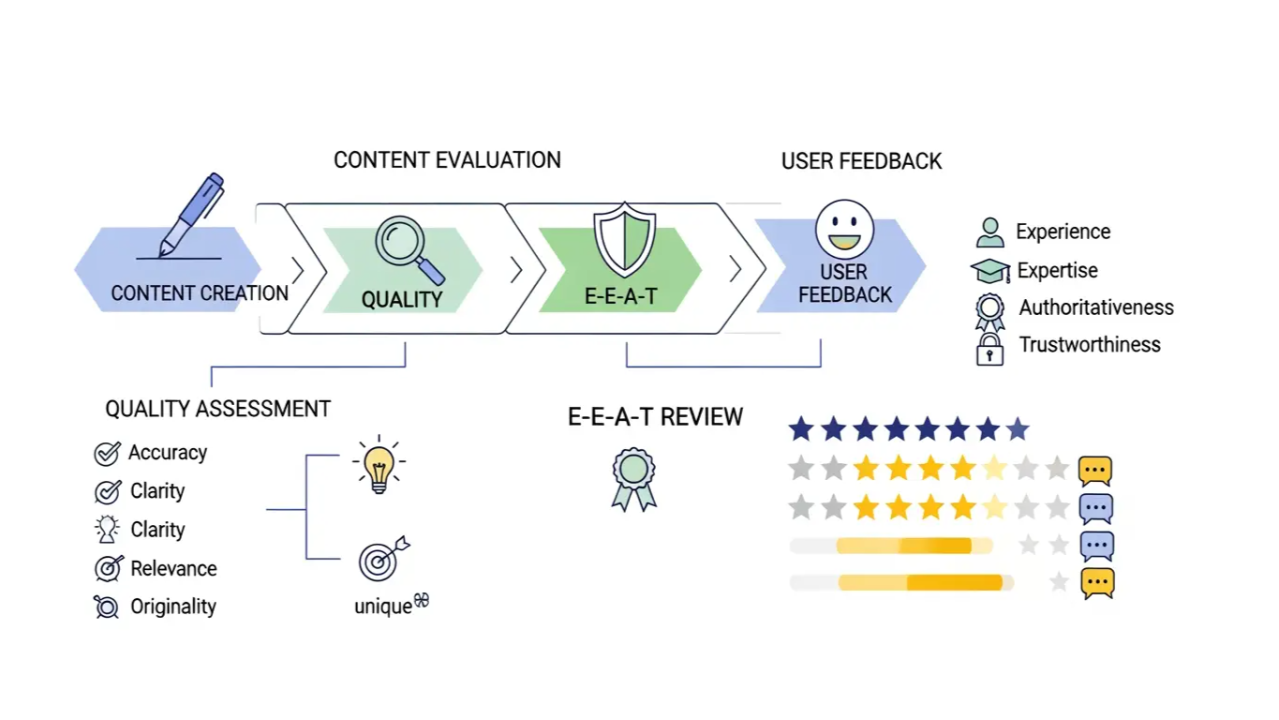
The updated guidance requires manual fact-checking and verification before publication. This requirement extends beyond article body text to titles, meta descriptions, structured data, image alt text, and any content elements visible to users or crawlers.
Crucially, Google notes that this is not a ban on AI-assisted content. It is a mandate that publishers take responsibility for accuracy before publishing.
How this affects affiliate marketing
Affiliate marketing sites—particularly betting, casino, and financial verticals—face heightened scrutiny because users make real financial decisions based on published information. An error about a casino’s withdrawal timeline, bonus terms, or licensing status can damage trust and create compliance issues.
Many affiliate sites currently use AI to generate comparison pages, bonus descriptions, and operator reviews with minimal human review. Google’s updated guidance, combined with the September spam update and SAFE detection system, targets exactly this pattern: high-volume AI content without human verification.
Affiliate sites that continue publishing unverified AI-generated bonus pages, operator comparisons, and reviews will face ranking penalties or removal from search results entirely. Affiliate sites that implement human fact-checking workflows will maintain rankings and potentially gain visibility from competitors who don’t.
What counts as “fact-checking”?
Google does not require a specific fact-checking process. It requires verification that the published claims are accurate. For affiliate content, this means:
For bonus pages: Verify bonus amounts, deposit requirements, wagering requirements, expiry dates, and game restrictions directly from the operator’s website or terms. Document the date you verified the information. When bonus terms change (which they frequently do), update the page and document the update date.
For operator reviews: Verify license status from official regulators, confirm payment methods from the operator’s payment page, test withdrawal processes and timelines, and document evidence. Do not claim “fast withdrawals” without testing and documenting actual withdrawal times.
For comparison tables: Verify each claim made in the table. If you claim “Casino X has no wagering requirements,” ensure that’s accurate as of the publication date. Update the table when terms change.
For schema markup: Ensure all structured data (ratings, offers, availability, pricing) accurately represents information visible on the page. Do not add fake aggregate ratings or availability claims not supported by page content.
How AI-written content fits into strategy
AI-generated content is acceptable as a production tool when used correctly. The right workflow is:
- Research and collect verified source material (operator terms, regulator information, payment pages)
- Create detailed outline or notes with verified facts
- Use AI to draft content based on verified notes (not vague prompts)
- Have a human fact-checker review every claim against sources
- Update metadata (title, meta description, schema) with verified information
- Publish with confidence that all claims are backed by source material
This approach leverages AI for speed and writing quality while ensuring human judgment and verification control the accuracy. It is different from the high-volume, unverified AI publishing that spam updates target.
Metadata: an often-overlooked compliance risk
Many publishers fact-check article body text but neglect metadata. AI often generates misleading or inaccurate meta descriptions, title tags, and schema markup because these are generated separately from article content.
Common problems: meta description claims a bonus that has expired, title tag overstates a bonus amount, schema markup lists a game as available when it’s restricted in the user’s region, or alt text makes unsupported claims about images.
Google’s guidance specifically mentions that fact-checking applies to these elements. Affiliate sites should audit all metadata as aggressively as they audit body content.
Recovery from AI content penalties
If your site was penalized by the September spam update or SAFE detection system, recovery requires genuine content improvement, not cosmetic changes. Google notes that recovery may take months even after improvements are made, because automated systems need time to recognize that a site has changed its publishing standards.
Recovery steps: remove all unverified AI-generated content or republish with fact-checking, implement a documented fact-checking workflow visible to crawlers (publication date, update date, sources), rebuild authority by citing original sources and demonstrating expertise, and monitor Search Console for ongoing indexing and ranking trends.
Opportunity for differentiation
Competitors publishing high-volume unverified AI content will face increasing penalties. Publishers who invest in fact-checking, transparent methodology, and original research will build competitive advantage. An affiliate site with documented, verified bonus information and tested operator reviews will outrank competitors relying on unverified AI summaries.
This is true for GEO as well: AI systems cite sources they recognize as authoritative. Content backed by verifiable research, clear methodology, and author expertise earns citations in AI responses. Content that appears to be AI-generated without verification does not.
Related Resources
- SEO, GEO, AEO Audits: Website Audit Tool for AI Search
- Shift To GEO (Generative Engine Optimization) & Publisher Compensation Pushback
- Google Spam Update And Image Search Data In Search Console
- Ditch the Bloat: How Modern WordPress Features Can Reclaim Your Site’s Speed and Search Traffic
- First-Party Data & Clean Rooms Replace Deprecated Third-Party Signals
- AI Marketing Trends 2026: Why Fact-Checked Content and AI Search Visibility Matter More Than Ever
- Stop Assembling, Start Building: How Lean Tech Stacks Maximize Core Web Vitals and Paid Ad Returns
- Publisher Friction & AI Web Scraping Monetization
- AI-Native Creative Production Becomes The Baseline
- How I Build An SEO Content Roadmap For The AI Search Era (Step-By-Step)
- What Are Common Structured Data Mistakes That Hurt AI Visibility?
- A Strategic Look at SEO, AEO, and GEO in 2026
Related Resources
Master GEO, read citation tracking, explore trends, optimize for AI, and build your toolkit.
Sources
- Google Search Central — Guidance on using generative AI content
- Search Engine Journal — Google SAFE spam detector for synthetic abuse
- Search Engine Journal — Google September 2026 spam update
- Google Search Central — Structured data policies
- Google Search Central — Creating helpful, reliable, people-first content