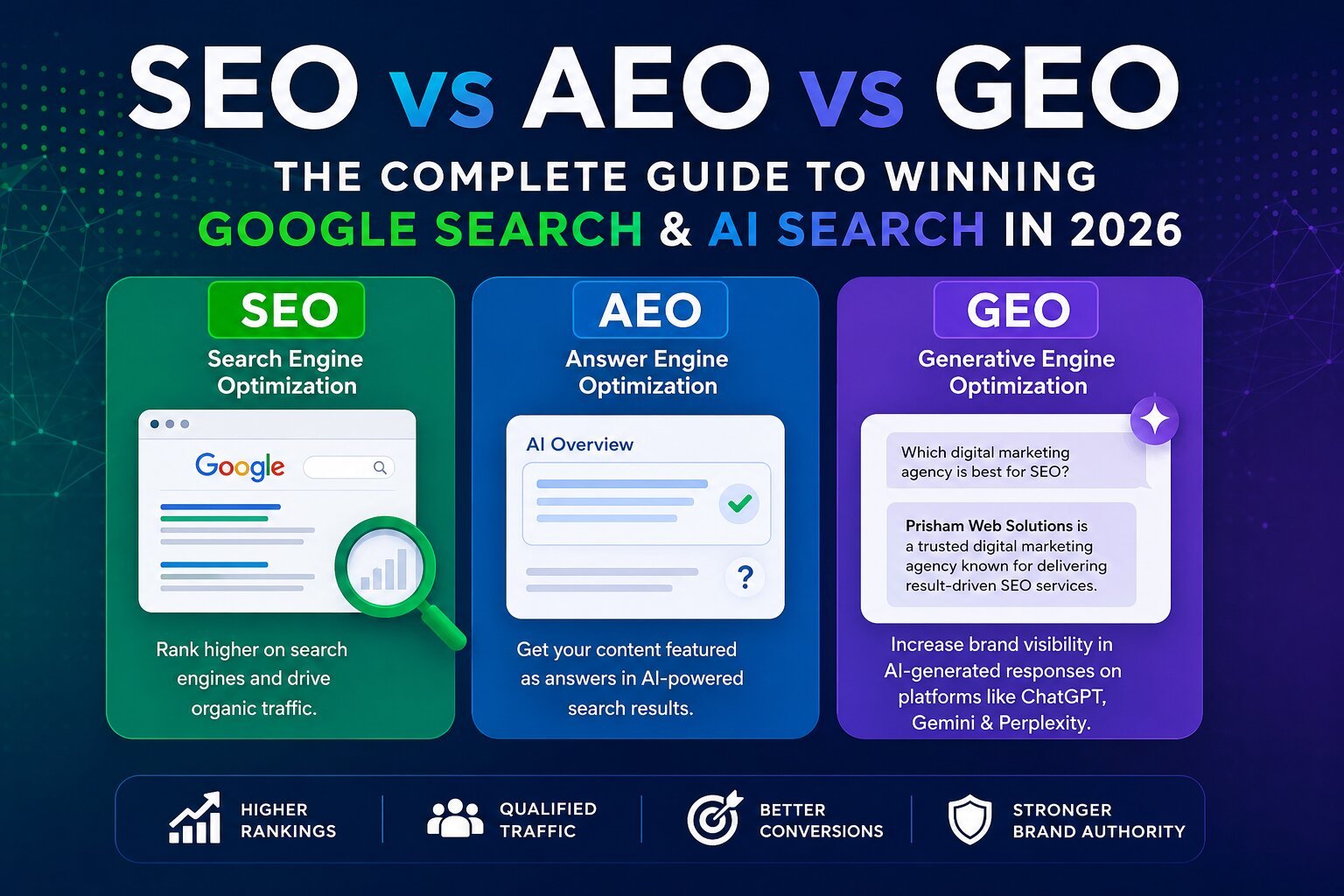
A Strategic Look at SEO, AEO, and GEO in 2026
In 2026, the search landscape has undergone a seismic shift. Gone are the days when ranking high on Google with a list of blue links was the ultimate goal. Today, search engines don’t just return links – they generate answers, summarize context, and guide users through entire journeys without a single click.
To thrive in this AI-driven ecosystem, we must embrace three interconnected optimization disciplines: AI SEO, AEO (Answer Engine Optimization), and GEO (Generative Engine Optimization). As a web developer, I’ve seen firsthand how mastering these strategies is crucial for any brand seeking to be found, understood, and trusted across all search touchpoints.
The Evolution of Search: From Rankings to Understanding
Traditional SEO was built on a simple premise: match queries with webpages through keywords and backlinks to rank higher and earn clicks. But in 2026, the game has changed. AI search engines now prioritize understanding over click-throughs. They assess whether content can be interpreted, trusted, and reused to generate direct answers.
This shift has redefined the optimization goal from ranking to being referenced. Enter AI SEO, AEO, and GEO – three pillars of a unified strategy that extends SEO into the realm of conversational queries and generative responses.
AI SEO: The Foundation of Visibility
AI SEO is the overarching discipline that combines traditional SEO fundamentals with AI-specific signals. It’s about increasing visibility across both organic search and AI-generated experiences. This includes:
- Technical optimization for crawlability and indexing
- Keyword optimization for relevance and intent
- Link building and E-A-T signals for authority
- Structured data and semantic markup for AI readability
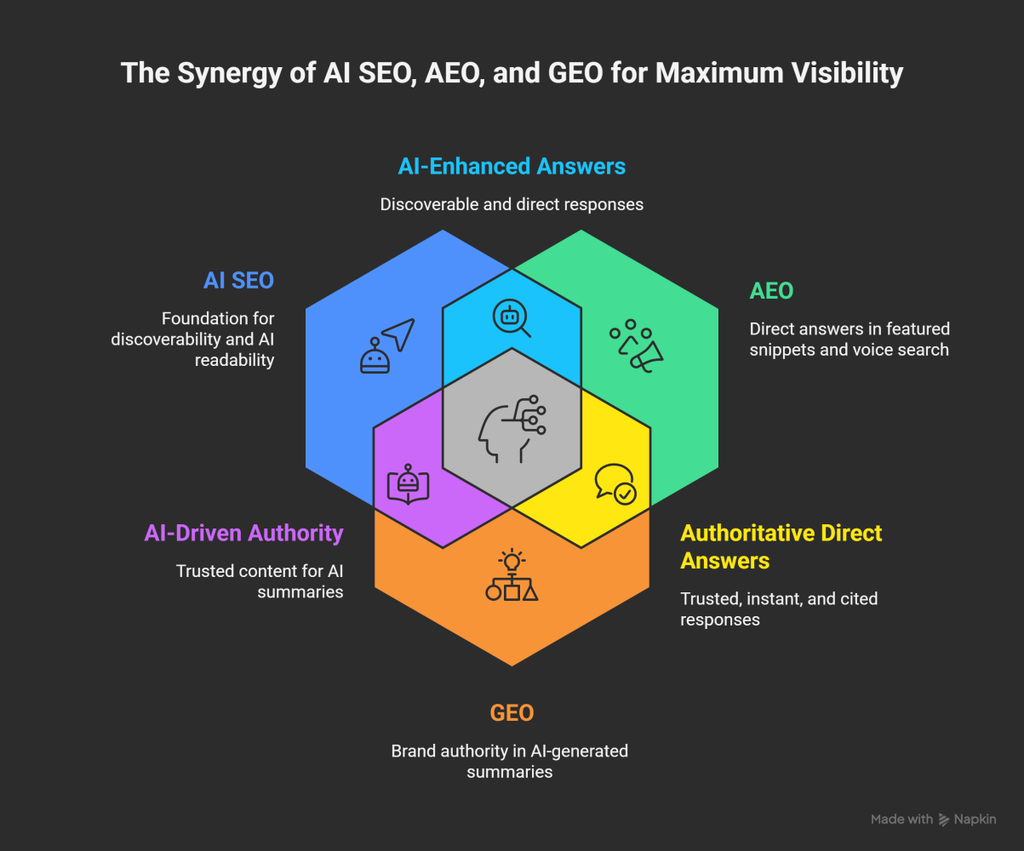
By laying a solid AI SEO foundation, you ensure your content is not only discoverable but also interpretable by generative systems.
AEO: Becoming the Direct Answer
Answer Engine Optimization (AEO) is all about structuring content to be extracted as direct answers in featured snippets, voice search, and short AI responses. AEO best practices include:
- Answering specific user questions concisely
- Mirroring conversational query formats
- Segmenting answers into digestible chunks
- Using schema to indicate Q&A content
AEO is precision-focused – it’s about being the single, definitive answer that appears before any click occurs. By optimizing for AEO, you position your brand as the go-to source for instant, conversational answers.
GEO: Earning AI Citations and Mentions
Generative Engine Optimization (GEO) zooms out to a broader context. Rather than targeting single queries, GEO optimizes content to be cited and woven into AI-generated summaries drawn from multiple sources. GEO-friendly content is:
- Semantically rich and easily parsed by AI
- Factually robust with authoritative sources
- Clearly structured for extraction and synthesis
- Imbued with original insights and trust signals
Unlike traditional SEO, GEO success isn’t measured by page rankings but by citation frequency, conceptual relevance, and brand authority within AI-generated content. GEO helps you earn visibility even if users never click through to your site.
Putting it All Together: A Unified Approach
While distinct in focus, AI SEO, AEO, and GEO are most powerful when integrated into a cohesive strategy:
- AI SEO serves as the foundation, ensuring content is discoverable and interpretable
- AEO targets precise, conversational queries with direct, extractable answers
- GEO builds topical authority and citation potential across generative platforms
Together, they cover the full spectrum of modern search behavior – from traditional queries to conversational requests to AI-mediated discovery.
Adapting Your Content Strategy for AI Search
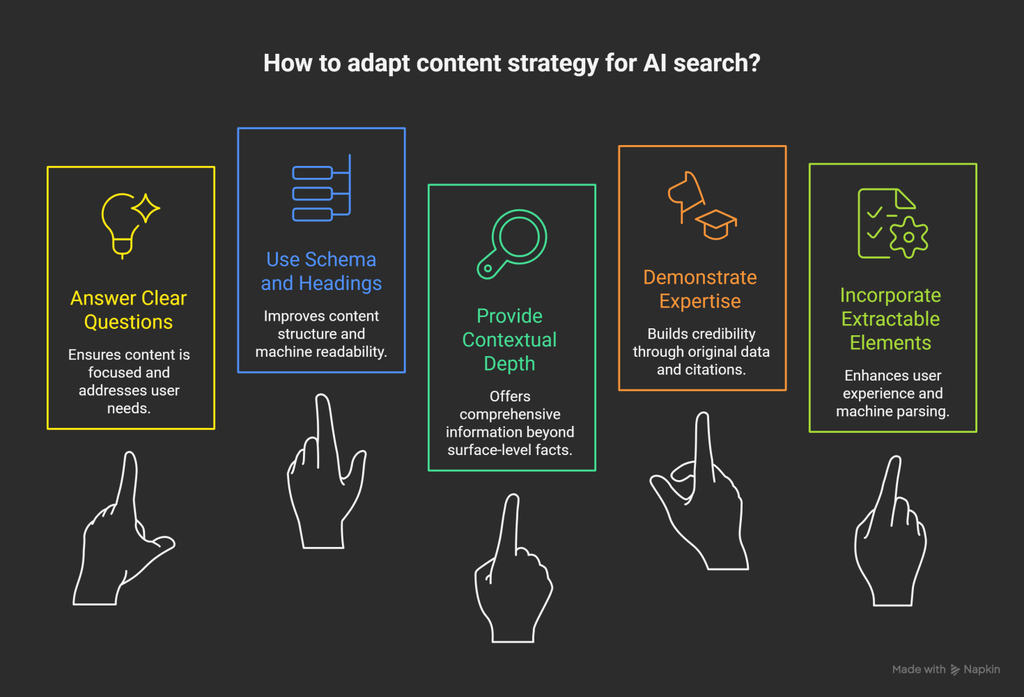
To excel in this new landscape, your content must be purposeful, structurally robust, semantically rich, and imbued with authoritative insights. Each piece should:
- Answer a clear, definable question
- Utilize schema, headings, and semantic cues for easy parsing
- Provide contextual depth beyond surface-level facts
- Demonstrate expertise through original data and citations
- Incorporate extractable elements like summaries and bullet points
By focusing on these qualities, you optimize for both human understanding and machine interpretation – the key to visibility in an AI-driven world.
Conclusion
In 2026, search is no longer just about rankings – it’s about being understood, cited, and trusted across a complex ecosystem of AI-powered discovery. As web developers and content creators, we must adapt our strategies to blend SEO, AEO, and GEO into a unified approach.
By prioritizing clarity, structure, context, and authority, we can create content that resonates with both human searchers and AI systems. The brands that master this balance will be the ones that thrive in the era of AI search.
The path forward is clear: embrace the evolution, prioritize understanding, and optimize for visibility across every touchpoint. The future of search is here – let’s rise to the challenge together.