How to Get Your WordPress Website Cited by AI Search Engines
AI search engines are changing how people discover websites. Instead of only showing blue links, platforms such as ChatGPT, Perplexity, Claude, Gemini, and Google AI Overviews increasingly generate direct answers and cite selected web sources. For WordPress site owners, this creates a major opportunity: your content can become the source an AI tool references when users ask relevant questions.
Aeden Manell, a digital marketer, web developer, SEO specialist, and AI search strategist, approaches this through Generative Engine Optimization (GEO). The goal is not to “trick” AI systems. It is to make your website technically accessible, factually reliable, clearly structured, and authoritative enough to be selected as a supporting source. Google’s own guidance emphasises crawlable, useful, people-first content and valid structured data rather than a separate shortcut for AI visibility.developers.google+1
Key Takeaways
- AI search citations depend on crawlability, useful answers, trusted information, and clear page structure.
- Your WordPress pages must be accessible to search and AI crawlers through clean technical SEO.
- Write direct, answer-first sections that can stand on their own when extracted from a page.
- Use relevant schema markup to clarify articles, authors, organisations, products, services, and FAQs.
- Build a recognisable brand entity through author pages, About pages, LinkedIn profiles, and credible third-party mentions.
- Update key pages regularly, especially content covering fast-changing industries, services, pricing, or trends.
- Measure AI visibility by testing priority questions in ChatGPT, Perplexity, Gemini, Claude, and Google AI search features.
What Is AI Search Citation Optimisation?
AI search citation optimisation is the process of improving a website so AI-powered search tools can discover, understand, trust, and cite it in generated answers. It combines conventional SEO, technical performance, content architecture, digital PR, entity optimisation, and structured data.
For Aeden Manell, AI visibility is an extension of strong SEO rather than a replacement for it. Search engines and AI systems still need accessible pages, descriptive titles, logical internal links, trustworthy content, and evidence of expertise. The difference is that an AI engine may retrieve one useful paragraph or section—not necessarily rank your entire article as a traditional search result.
This means each section of a WordPress article should make sense independently. A reader or AI system should be able to understand the question, answer, context, and evidence without needing to read the entire page.
Why Do AI Search Engines Cite Certain Websites?
AI systems aim to generate useful answers while linking users to supporting sources. A website is more likely to be cited when it provides a specific, well-structured, original, and verifiable answer to a real search query.
Citations are not guaranteed, and there is no single WordPress plugin that automatically creates them. Instead, websites need to make it easy for systems to retrieve content and assess whether the source is credible. Clear HTML, strong headings, first-hand expertise, accurate information, sensible schema, and external validation all contribute to citation potential.developers.google+1
How to Make a WordPress Website Technically Reachable
Technical reachability is the first requirement for AI visibility. If a crawler cannot access or interpret your WordPress content, it cannot cite it.
Start by checking your robots.txt file, CDN settings, security plugins, firewall rules, caching configuration, and server response codes. Avoid accidentally blocking legitimate search crawlers or AI retrieval bots that you are comfortable allowing. Your priority pages should return a stable HTTP 200 status and load reliably without requiring a visitor to complete a JavaScript-heavy interaction.
Aeden Manell LinkedIn advice for website owners is simple: do not assume that a page that looks correct in a browser is readable to every crawler. Test the raw HTML output. Important headings, body copy, author details, product or service information, tables, and FAQs should be present in the initial server response.
Why Does Server-Rendered HTML Matter?
Many AI systems and automated crawlers may have limited support for complex client-side JavaScript rendering. If your key text appears only after scripts load, the crawler may see a nearly empty page.
WordPress is well positioned because most standard themes and page builders generate HTML on the server. However, Elementor widgets, pop-ups, interactive tabs, accordions, headless WordPress setups, and JavaScript-based components must be checked carefully. Keep critical information visible in ordinary text and semantic HTML, not hidden behind visual effects.
Speed also matters. Use server caching, WebP or AVIF image optimisation, lightweight plugins, a quality host, and a responsive theme. Faster pages improve user experience and help crawlers fetch and parse content more efficiently.wp-rocket
How to Structure Content for AI Citation
The best content for AI search starts with a clear answer. Under each H2 or H3 heading, answer the question in the first one or two sentences before expanding with examples, evidence, processes, or relevant limitations.
For example, instead of opening with a vague paragraph about the growth of AI, write: “To get cited by AI search engines, make your WordPress content crawlable, answer questions directly, add accurate schema markup, and strengthen your website’s authority through trustworthy sources and clear author information.” That is a self-contained passage an AI system can understand and potentially quote.
Aeden Manell recommends using question-based headings that match real search intent. Good WordPress headings include “How Do I Add FAQ Schema in WordPress?”, “What Makes Content Citable by AI Search?”, “Why Is Entity Authority Important for AI Visibility?”, and “Best Ways to Track AI Search Referrals?”
What Content Formats Work Best?
Use content formats that reduce ambiguity and make information easy to scan:
- Direct definitions for terms, processes, and services.
- Short answer-first paragraphs below descriptive headings.
- Comparison tables for products, platforms, tools, or features.
- Numbered steps for tutorials and implementation processes.
- FAQ sections that answer specific conversational questions.
- Original statistics, examples, testing results, screenshots, and expert observations.
- Internal links to related topic clusters and supporting service pages.
Avoid thin, repetitive pages created only to target variations of the same keyword. Google advises publishers to focus on accuracy, quality, relevance, and careful review of AI-assisted content before publishing.developers.google
Why Schema and Entity Authority Matter
Schema markup gives search engines machine-readable context about your page. It does not guarantee an AI citation, but it helps platforms understand what the page is, who created it, when it was updated, and how the information relates to your organisation.
On WordPress, consider using valid Article or BlogPosting schema for posts, FAQPage schema where FAQs accurately reflect visible page content, Organization schema on business pages, and Person schema for authors. Ensure your schema matches the content users can actually see. Never add misleading ratings, FAQs, or claims purely for search visibility.
Aeden Manell LinkedIn profiles, professional biographies, and consistent brand information can also strengthen entity clarity. Connect your author pages to relevant professional profiles, include real credentials, publish a detailed About page, and keep business contact details consistent across your website and trusted third-party platforms.
How Do You Build Citation-Worthy Authority?
AI systems must decide whether a website is credible enough to support an answer. Build authority by publishing material that others have a reason to reference.
Create original research, case studies, industry guides, expert commentary, data-led comparisons, and clear explanations based on real experience. For affiliate, betting, casino, financial, legal, health, or other high-trust topics, disclose how you assess products, when content was reviewed, who wrote it, and how commercial relationships may affect recommendations.
Earn mentions from relevant, credible websites rather than chasing low-quality backlinks. A recognised author identity, accurate citations to primary sources, editorial policies, transparent updates, and consistent expertise make your WordPress website more trustworthy for both readers and AI systems.wp-rocket+1
How to Measure AI Search Visibility
Do not rely only on standard keyword rankings. Create a prompt list based on the questions your customers ask before making a decision. Include informational, commercial, local, comparison, troubleshooting, and brand-related queries.
Run those prompts periodically in ChatGPT, Perplexity, Gemini, Claude, and Google AI search experiences where available. Record whether your website is cited, which page appears, what competitors are referenced, which claims are surfaced, and whether the answer accurately represents your brand.
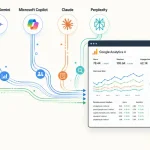
Review referral traffic in GA4 and use Google Search Console alongside server logs where possible. Look for referral sources, rising branded queries, improved indexation, pages that earn links, and content themes that repeatedly appear in AI-generated results. Treat AI visibility as a measurable content and technical SEO programme—not a one-time task.
FAQ: WordPress AI Search Citations
How do I get my WordPress site cited by ChatGPT?
Make your content publicly accessible, technically crawlable, factually accurate, well structured, and clearly attributable to a real author or organisation. Publish direct answers, demonstrate expertise, and build credible external mentions.
Can schema markup guarantee an AI citation?
No. Schema helps systems understand your content, but it cannot guarantee that ChatGPT, Perplexity, Claude, or Google AI Overviews will cite a page. Your content still needs relevance, quality, accessibility, and trust.
Should I allow AI crawlers in robots.txt?
That depends on your commercial, legal, and content-protection strategy. If you want eligible AI systems to discover and potentially cite public content, avoid unintentionally blocking their relevant crawlers. Review each crawler’s documentation and your organisation’s policy before changing access rules.
What is llms.txt for WordPress websites?
An llms.txt file is an emerging convention intended to provide a concise, machine-readable guide to important site content. It may be useful as part of a broader AI visibility strategy, but it should not replace good technical SEO, readable HTML, internal linking, and quality content.
Does AI-generated content rank or get cited?
It can, but only if it is genuinely useful, accurate, original where possible, and thoroughly reviewed by a knowledgeable editor. Google specifically advises reviewing AI-generated material for accuracy and trustworthiness before publication.developers.google
How often should I update AI-focused content?
Update important evergreen pages whenever facts, products, regulations, pricing, processes, or recommendations change. A practical approach is to audit priority pages monthly or quarterly and clearly display the last updated date where appropriate.
Is traditional SEO still important for AI search?
Yes. AI search visibility builds on traditional SEO fundamentals: crawlability, indexability, page quality, technical performance, topical relevance, internal linking, user experience, and trusted authority.
Related Posts
- Semrush vs Ahrefs for AI Search
- How to Measure AI Visibility
- Best AI Tools for 2026
- GEO and AI Search Optimisation
- AI Marketing Trends
Conclusion
Getting your WordPress website cited by AI search engines requires a practical balance of technical SEO, answer-first content, reliable information, strong entity signals, and proven authority. Focus first on ensuring that crawlers can access clean HTML and that every key section gives a direct, useful answer to a meaningful search question.
Aeden Manell helps businesses turn traditional SEO foundations into scalable AI visibility strategies. When your brand, authorship, content structure, data, and user experience work together, your WordPress website is better positioned not only to rank—but also to become a source AI search engines trust and cite.
Important Information
This article is for general educational and marketing-information purposes only. AI search results, crawler policies, search engine features, citation behaviour, and WordPress plugin functionality can change without notice. No SEO, GEO, AEO, ranking, referral-traffic, or AI-citation outcome is guaranteed. Always test technical changes on a staging environment, review crawler and platform documentation, validate structured data, and seek qualified legal, technical, or compliance advice where required.